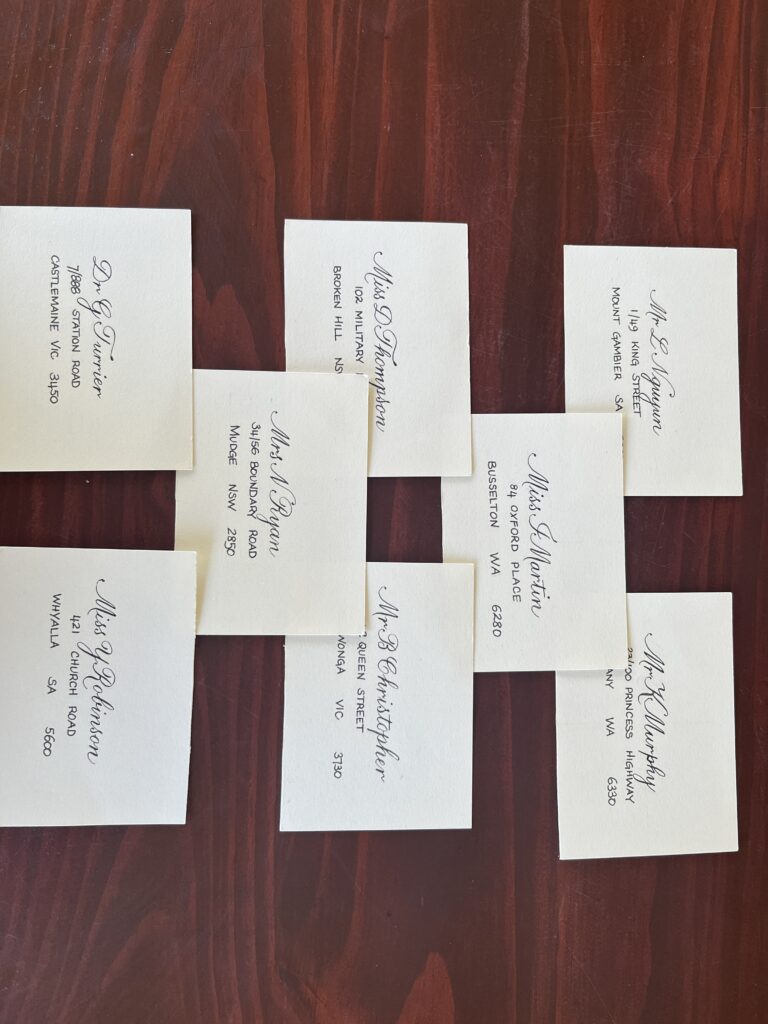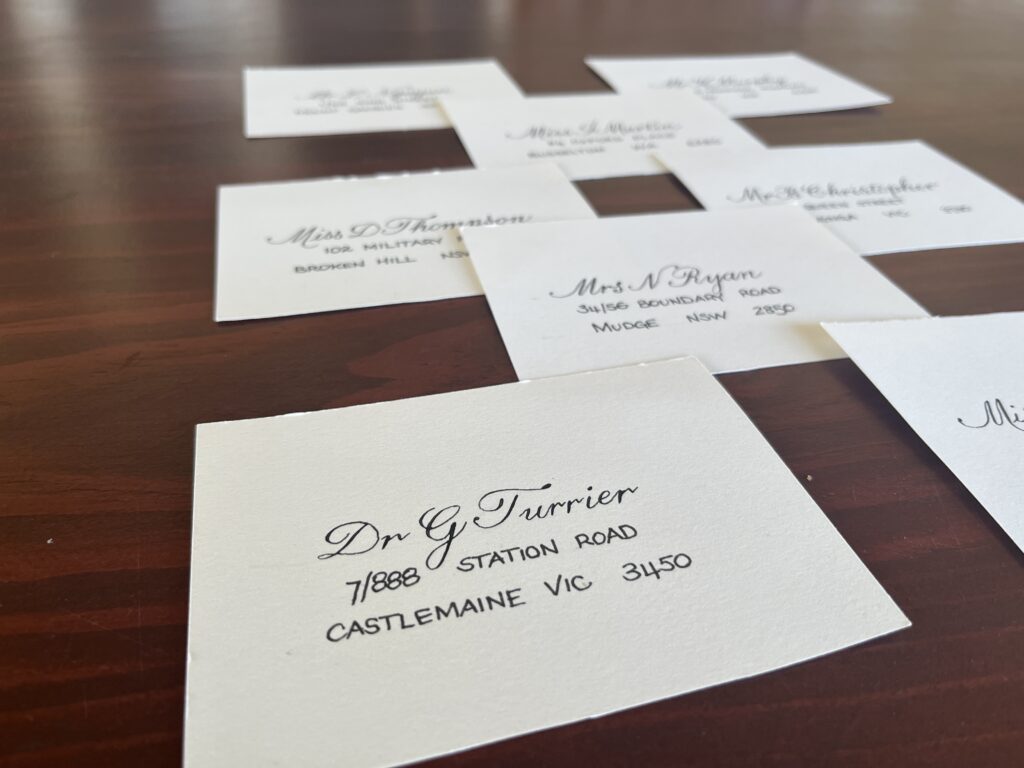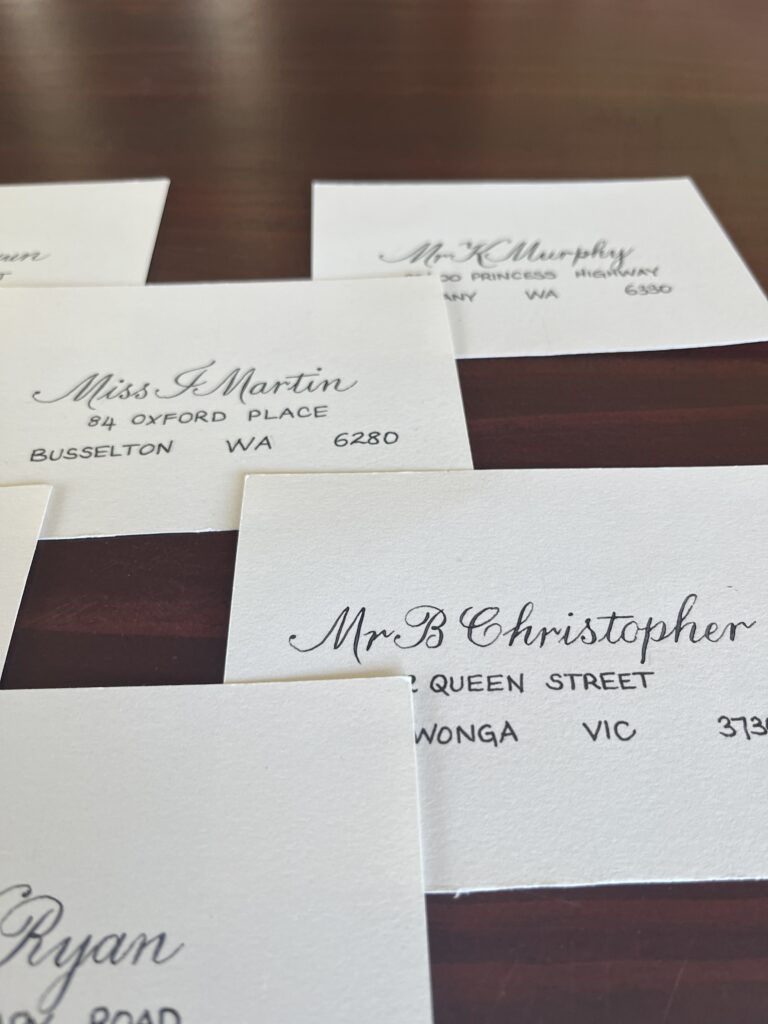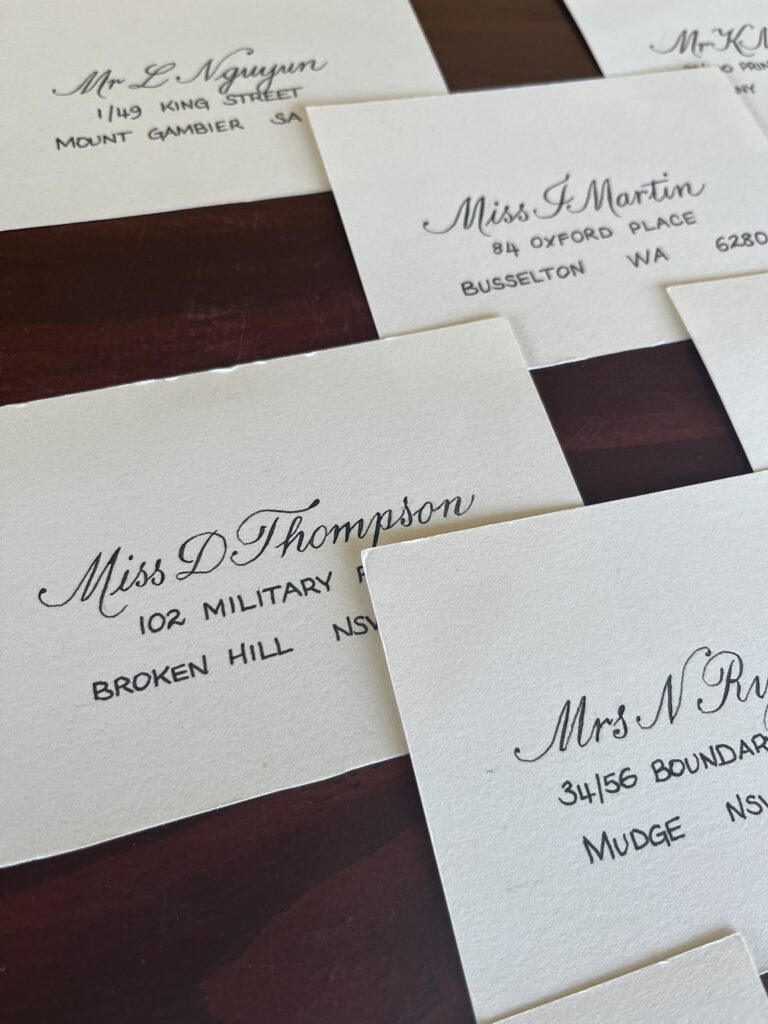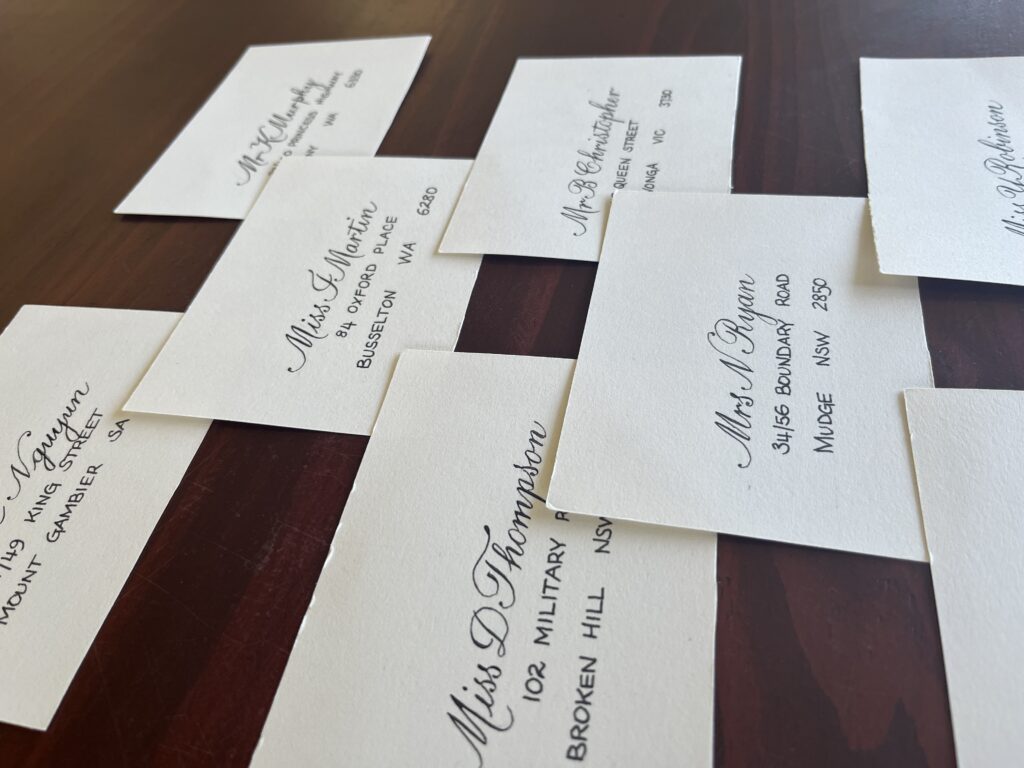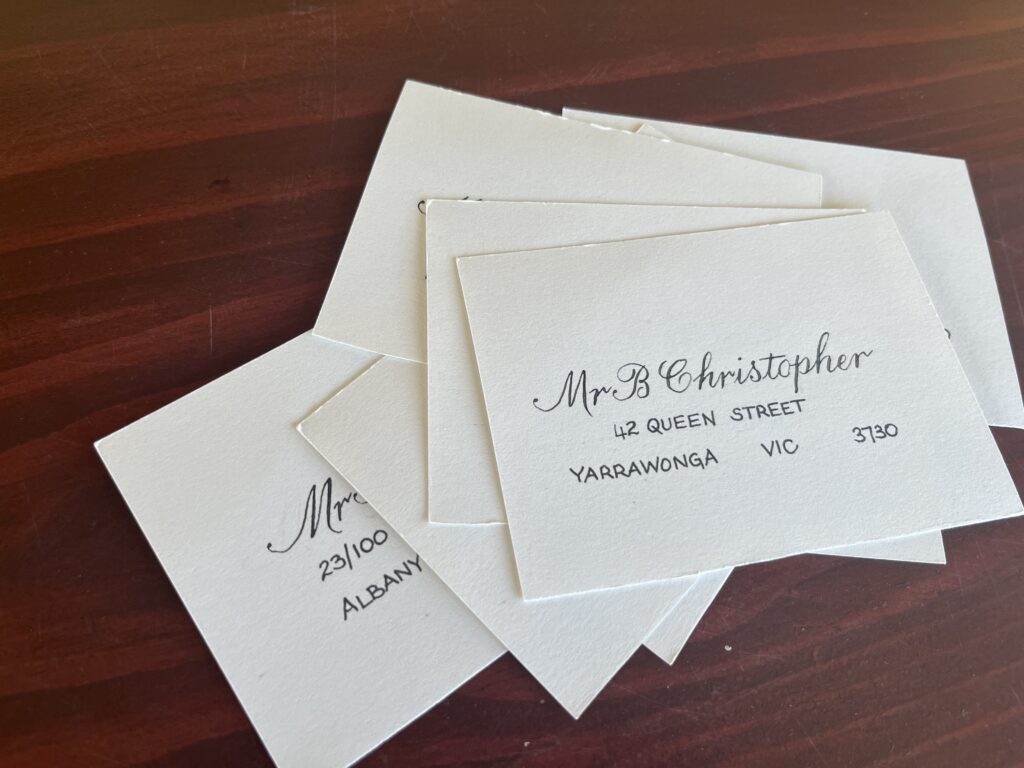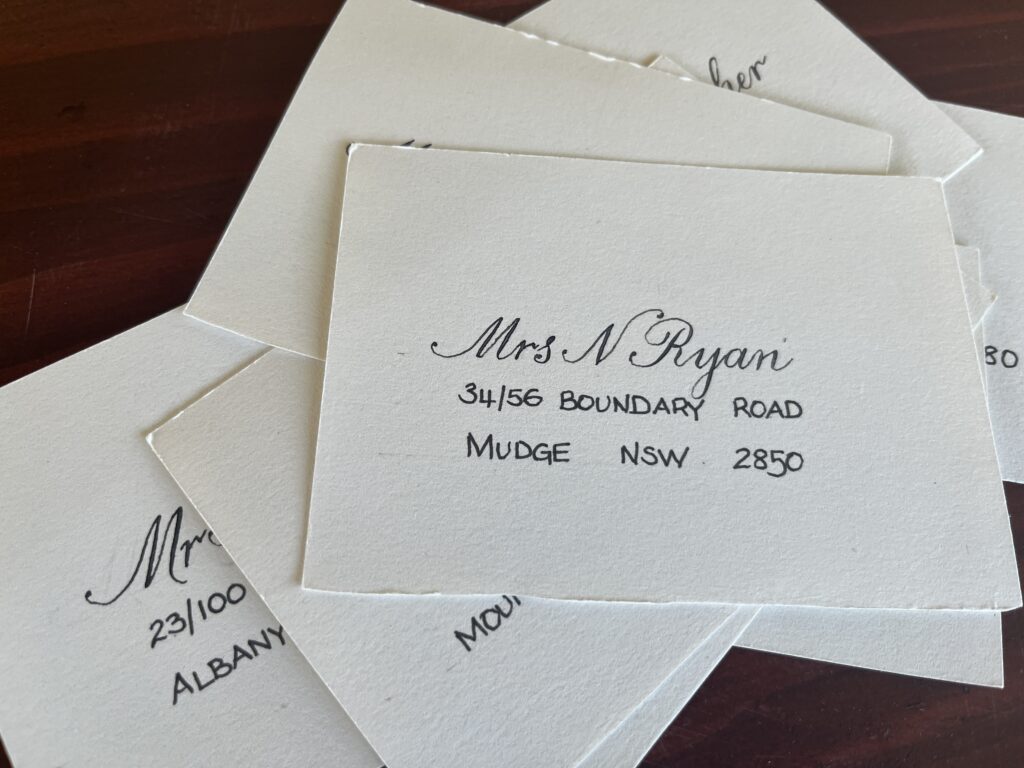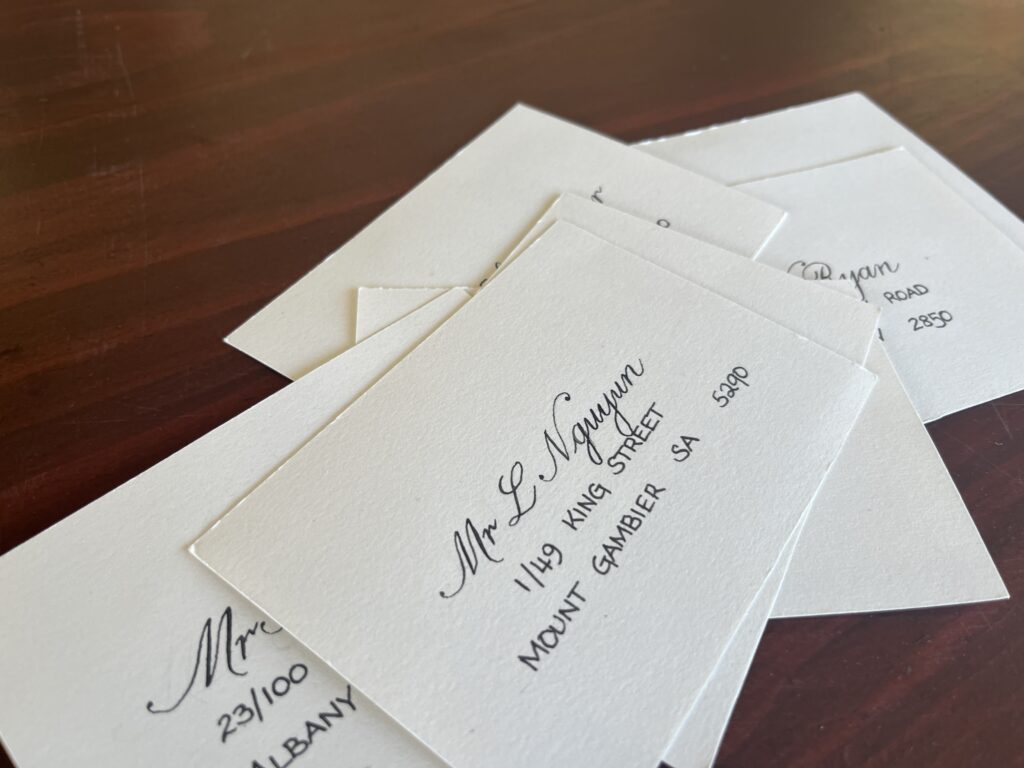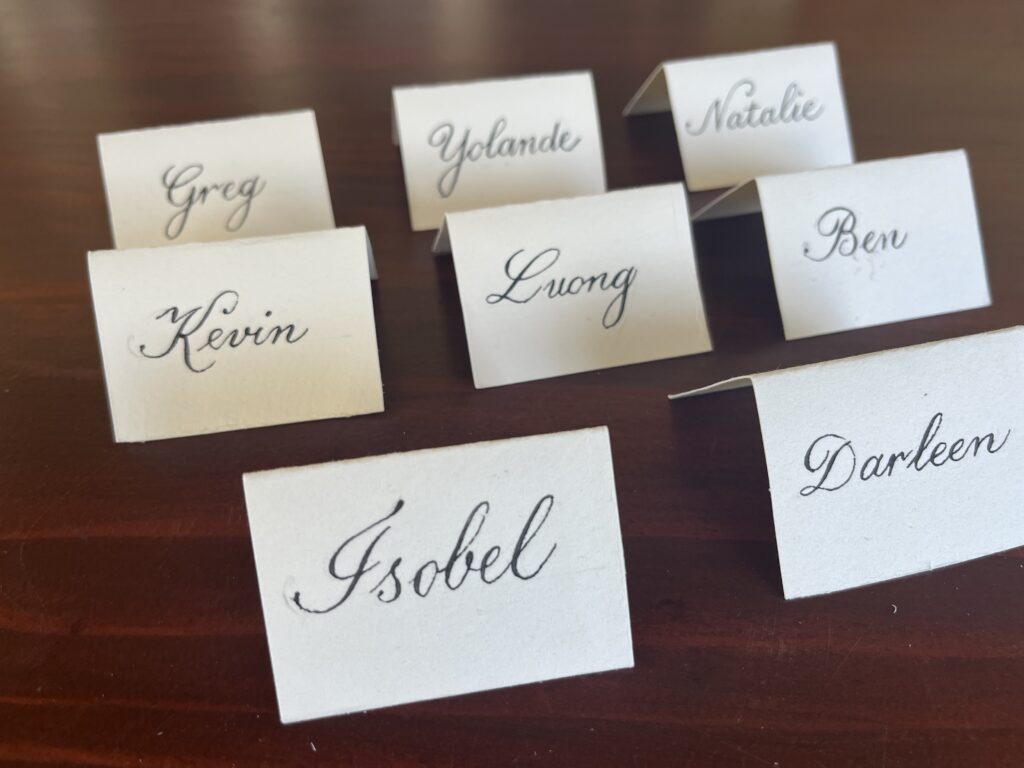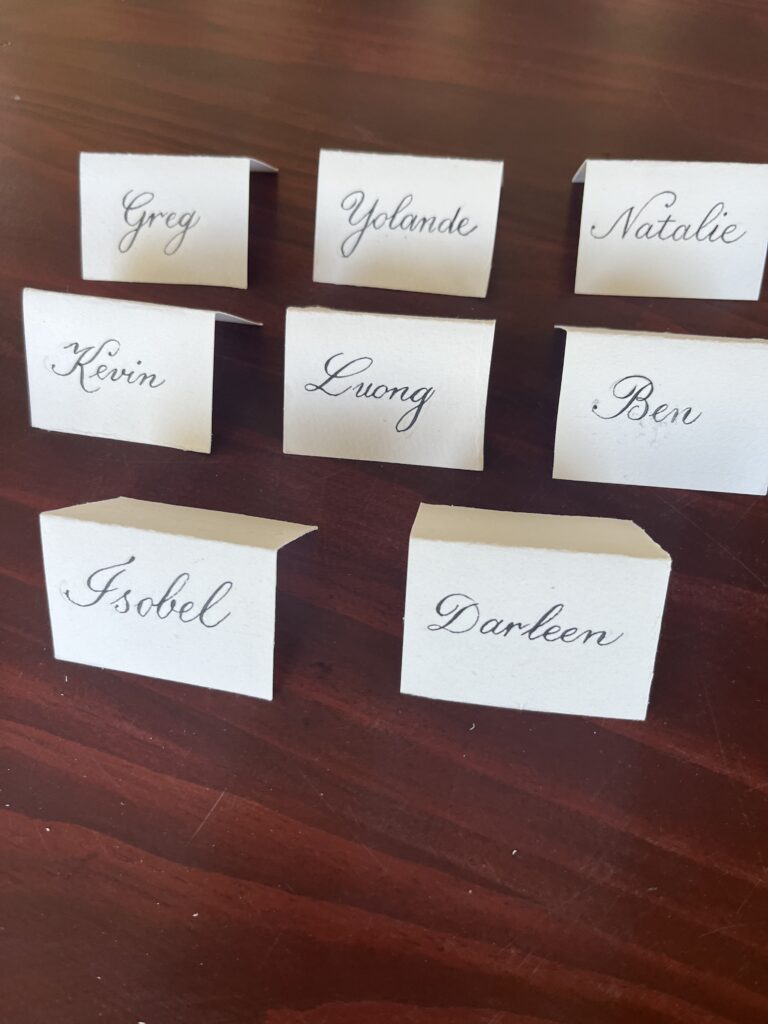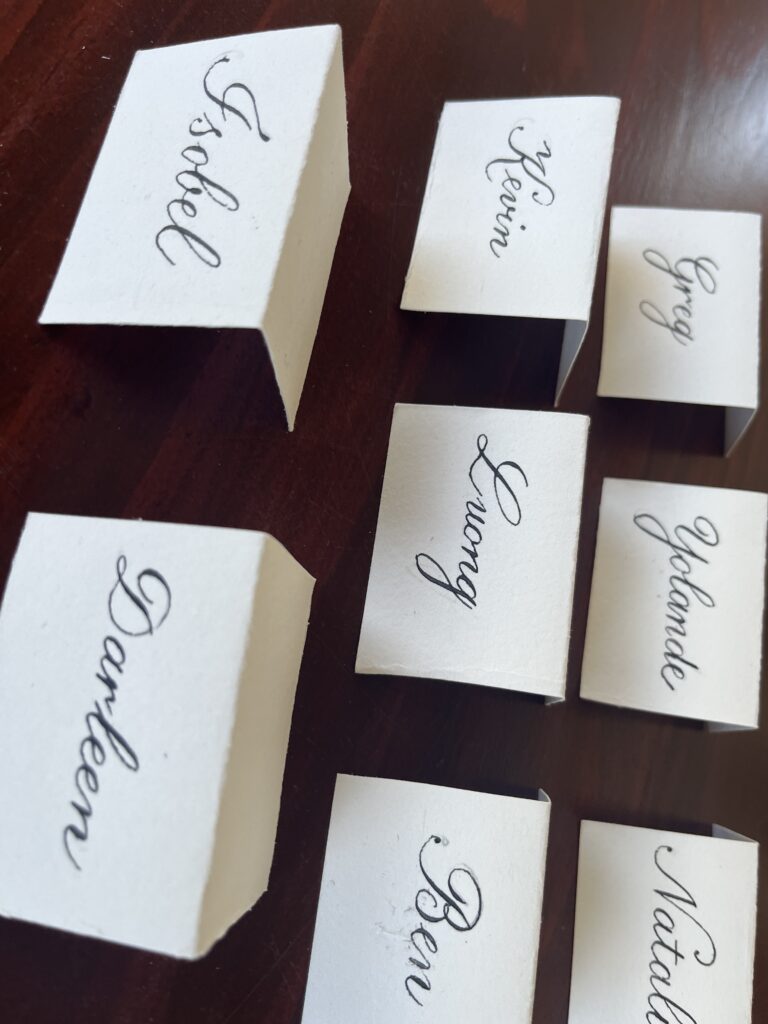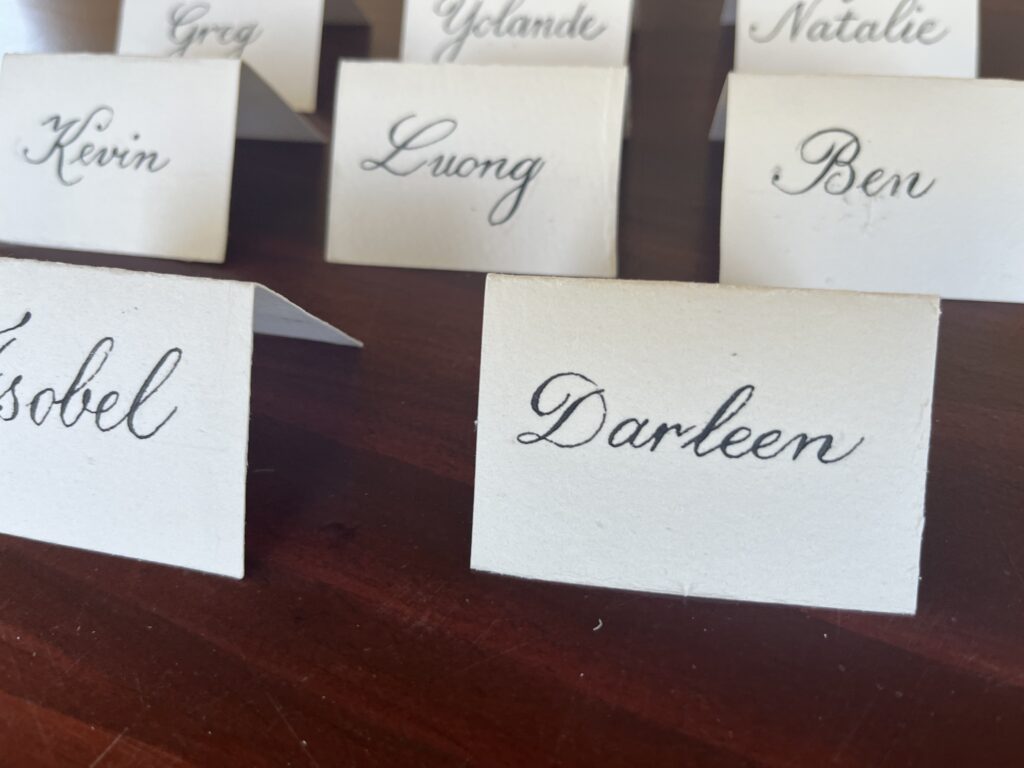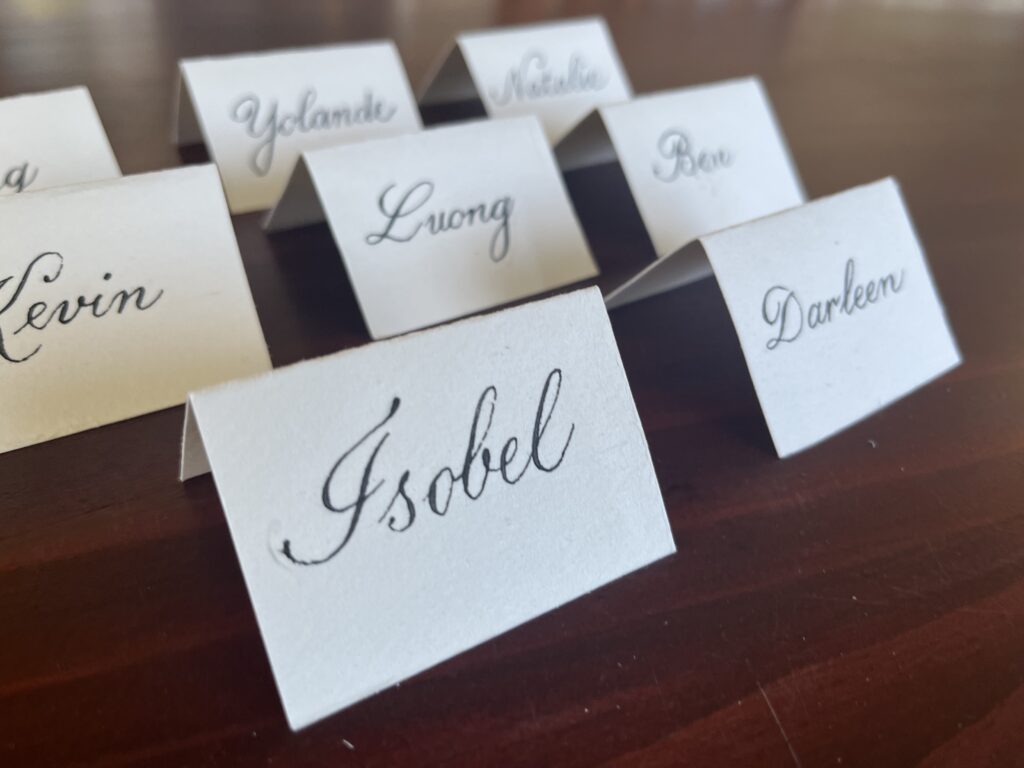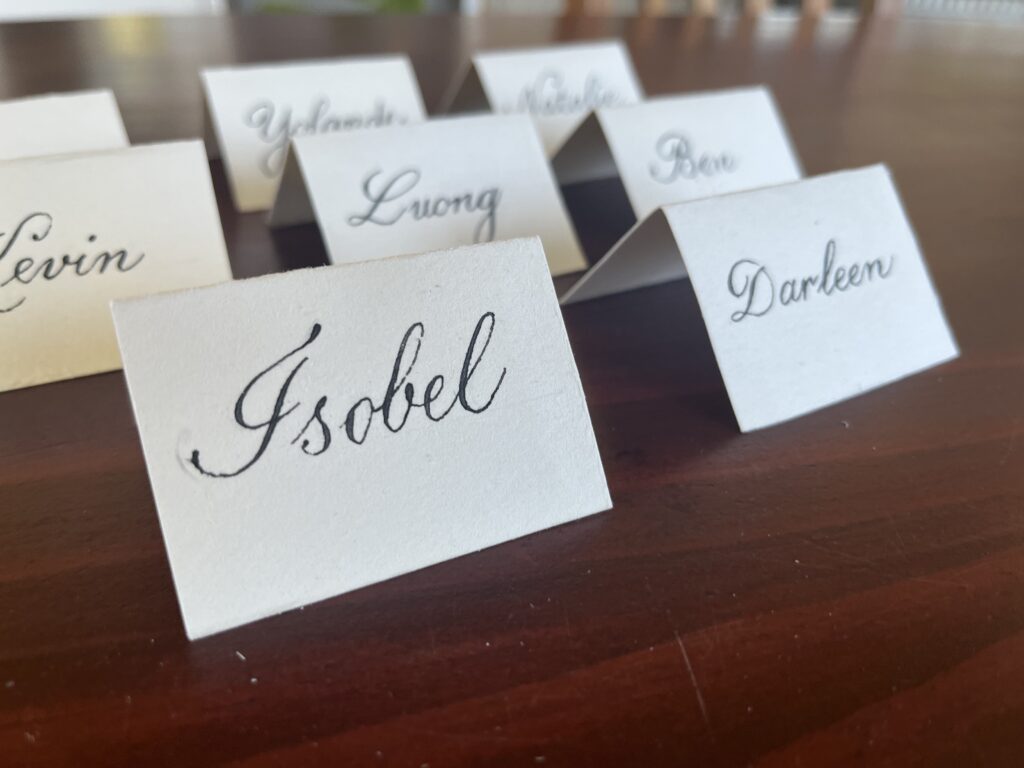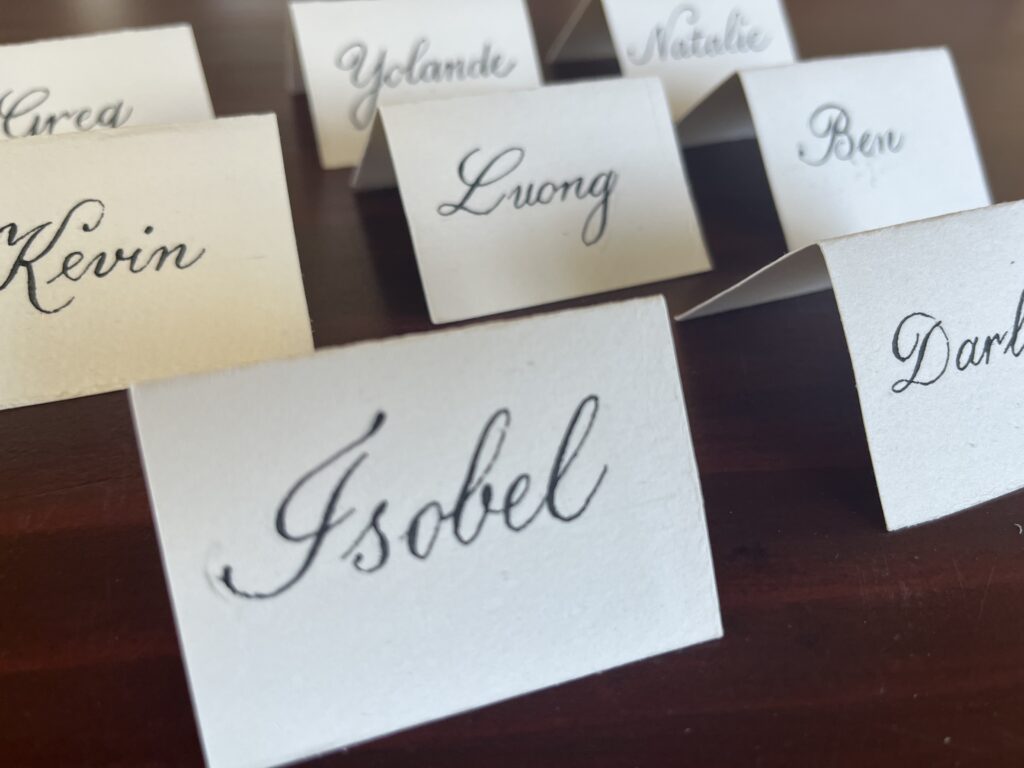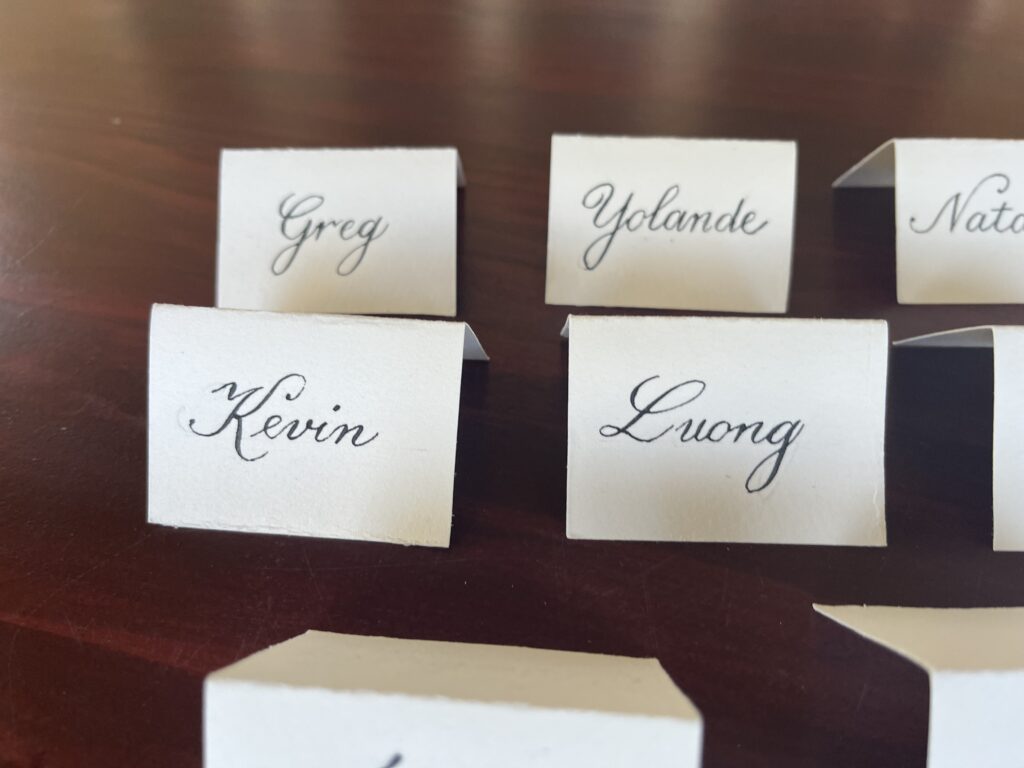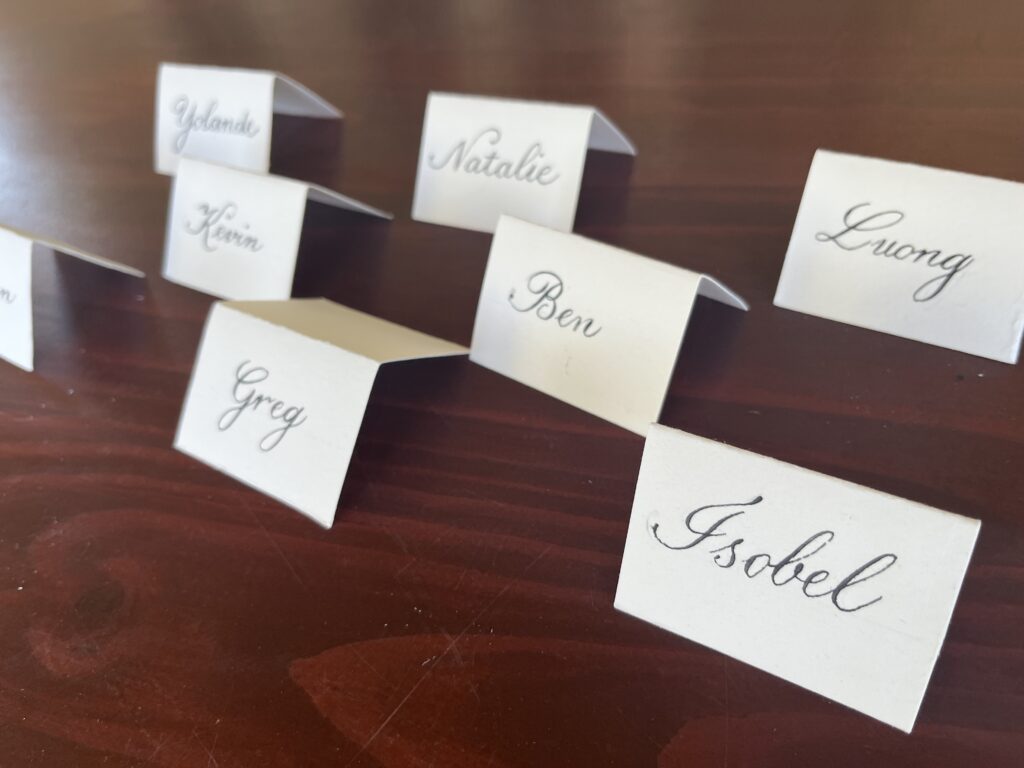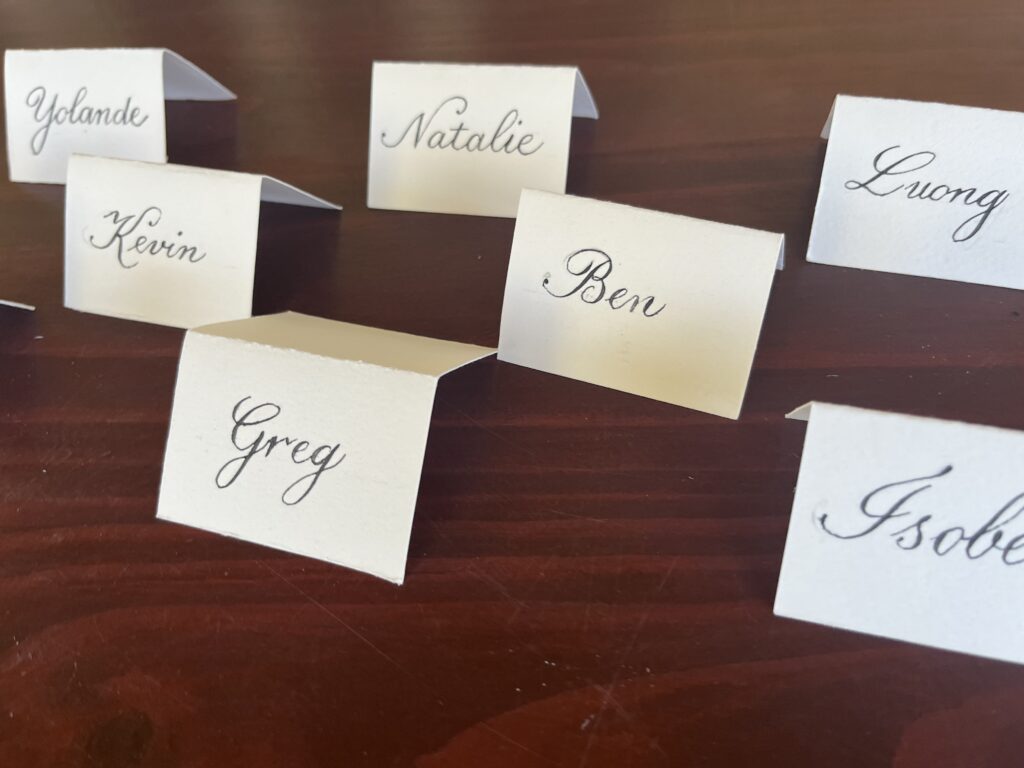

Portfolio photography is an important part of showing calligraphy professionally. Each image gives a window into the work, highlighting the care, detail, and artistry in every piece. From envelopes and placecards to finished projects, good photographs let viewers see the flow and texture of the letters.
Studio and workspace images add context. They show the tools, materials, and environment behind the work, giving a sense of the space where creativity happens. Combining these shots with images of the pieces themselves creates a full picture of the craft, balancing the artwork with its surroundings.
Including portraits or environmental shots adds a human element. These images show that the work is created with care and dedication, making the portfolio feel authentic and approachable. Together, portraits, studio shots, and work images form a professional, cohesive presentation.
Composition, lighting, and perspective are key. Balanced lighting brings out textures and details, while thoughtful framing keeps the focus on the work. Backgrounds should support the piece without distracting from it. Each photograph should feel clean, polished, and engaging, letting the craft speak for itself.
A portfolio is always evolving. New work, improved techniques, and refined compositions can be added over time. This keeps the portfolio current and reflects growth and development in the craft. Over time, it becomes more than a collection of images—it shows practice, skill, and professional progress.
Portfolio photography also plays a role in professional presence online. Well-chosen images communicate attention to detail, quality, and professionalism. They allow clients or viewers to connect with the work visually, creating a lasting impression even before any direct interaction.
At its core, portfolio photography is part of the craft itself. Images capture the rhythm, flow, and care put into each piece. They provide a visual experience of the work, letting viewers appreciate the artistry even if they can’t hold the physical objects.
A well-curated portfolio—combining work, studio, and contextual images—becomes a complete showcase. It reflects both skill and dedication while giving insight into the creative process, making the craft accessible and inviting for anyone who sees it.